What sellers often miss
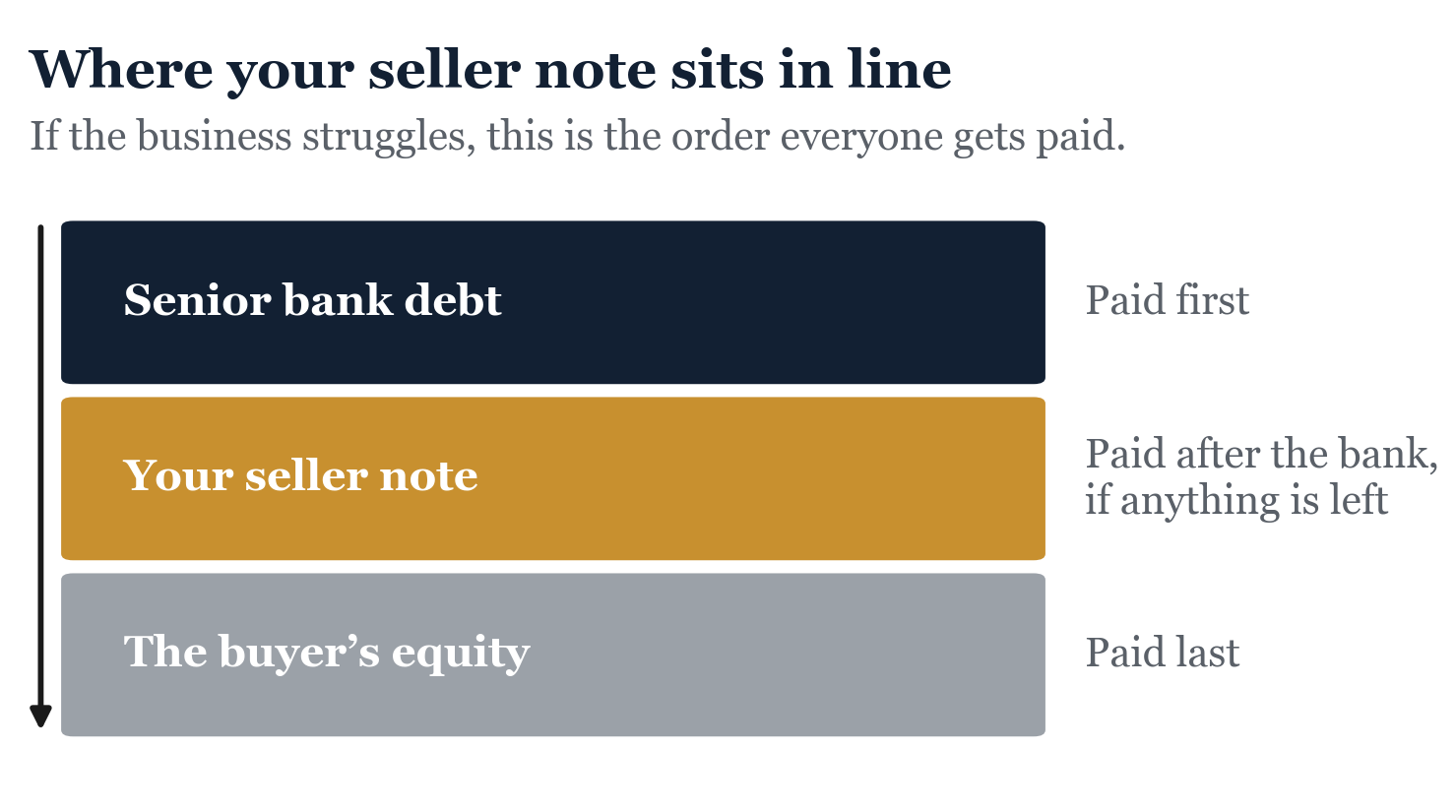
Many owners focus on the interest rate when evaluating a seller note. While the rate certainly matters, repayment risk matters more. A high interest rate on a note that is never repaid is far less valuable than a lower rate backed by a financially strong borrower and meaningful protections.
The takeaway
If seller financing becomes part of your transaction, evaluate the buyer the same way a lender would. Understand their financial strength, capital structure, debt obligations, and ability to service the note. Work with experienced advisors to negotiate appropriate protections and security. Most importantly, remember that seller financing is not simply deferred purchase price. It is credit exposure.
Illustrative, not your deal. Where the book uses dollar figures, they are there to show how something works, not to describe your business. Your banker, your accountant, and your attorney will put real numbers to your own situation. Full note.
Terms this chapter uses
Read the full chapter in the book