What sellers often miss
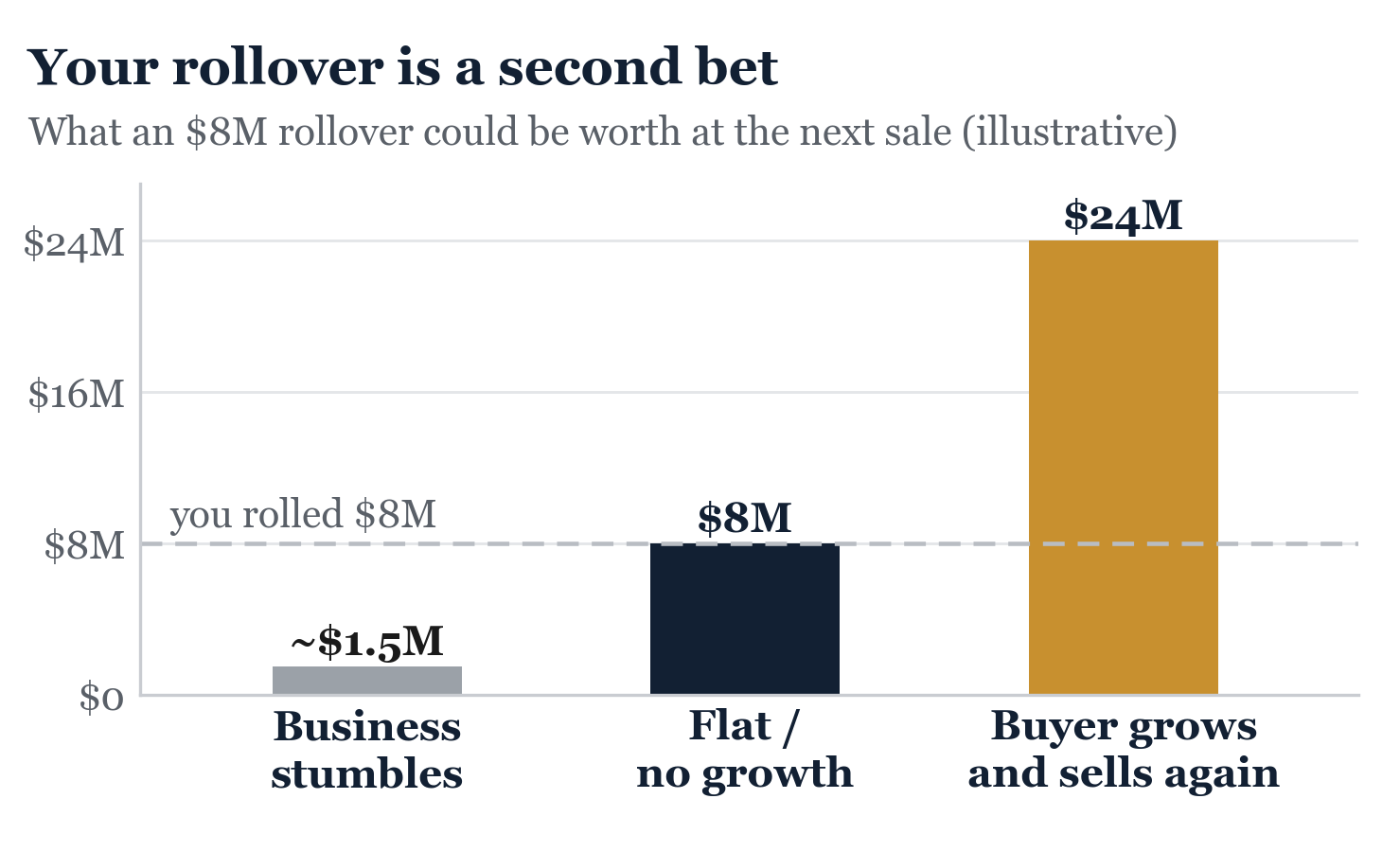
Many owners mentally treat rollover equity as part of the purchase price rather than as a separate investment. Buyers often view it differently. To them, rollover equity represents shared risk and aligned incentives. Sellers should analyze it with the same rigor they would apply to any other investment opportunity.
The takeaway
Evaluate rollover equity based on risk, not optimism. Understand the capital structure, future growth strategy, governance rights, and exit expectations. Most importantly, make sure the cash proceeds received at closing are sufficient to achieve your personal financial objectives. Rollover equity should enhance your financial future, not determine it.
Illustrative, not your deal. Where the book uses dollar figures, they are there to show how something works, not to describe your business. Your banker, your accountant, and your attorney will put real numbers to your own situation. Full note.
Terms this chapter uses
Read the full chapter in the book