Rule 1
Buyers pay for future cash flow, not past effort.
Chapter 1 · The Hidden Reality of Selling a BusinessIsn’t selling my business like selling anything else?
A field guide to selling a privately held company
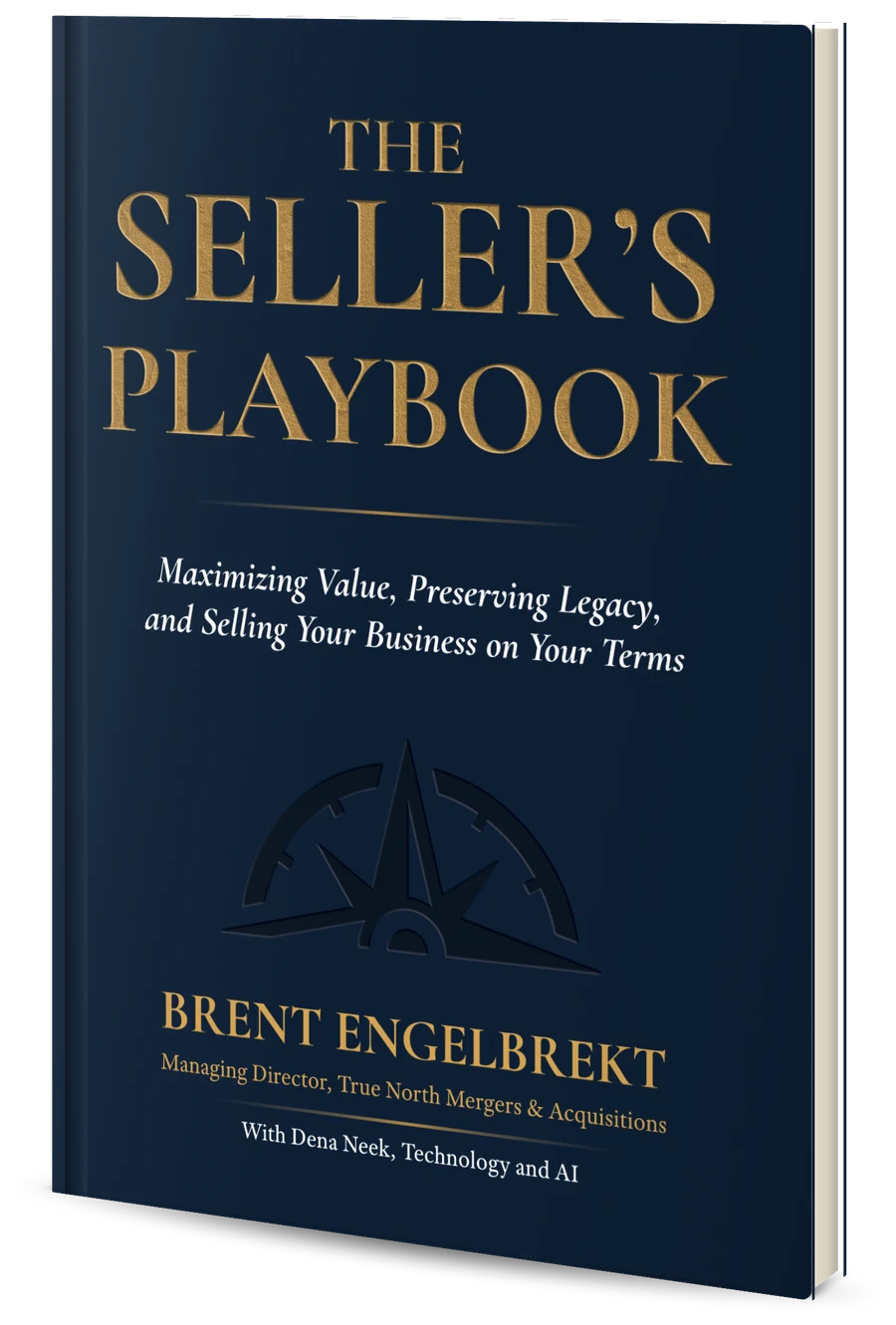
Maximizing Value, Preserving Legacy, and Selling Your Business on Your Terms
From Chapter 1
The customer concentration gets repriced, the add-backs get knocked out in diligence, a piece is carved into an earnout, a piece is rolled forward, and a piece sits in escrow. Brent opens the book with this example because everything after it depends on understanding the gap.
Inside the book
It is organized around the real questions owners ask when they sell, the ones they say out loud and the ones they do not yet know to ask. Each chapter is titled with its topic, and underneath it is the owner question that chapter answers. You can read the book straight through and follow the arc of a sale from first thought to final wire, or you can open to the one chapter you need right now and get a complete answer without having read the nine chapters before it. Each chapter stands on its own and points you to the others when they are relevant.
Part 1
The work that decides your number before a single buyer sees the business.
Part 2
Assembling the team, the buyers, and the story that create competition.
Part 3
What actually happens once your business is in front of buyers.
Part 4
Where the price you agreed to becomes the money you keep.
Part 5
The parts of your price that arrive later, if they arrive at all.
Part 6
The part nobody prepares you for.
About the book
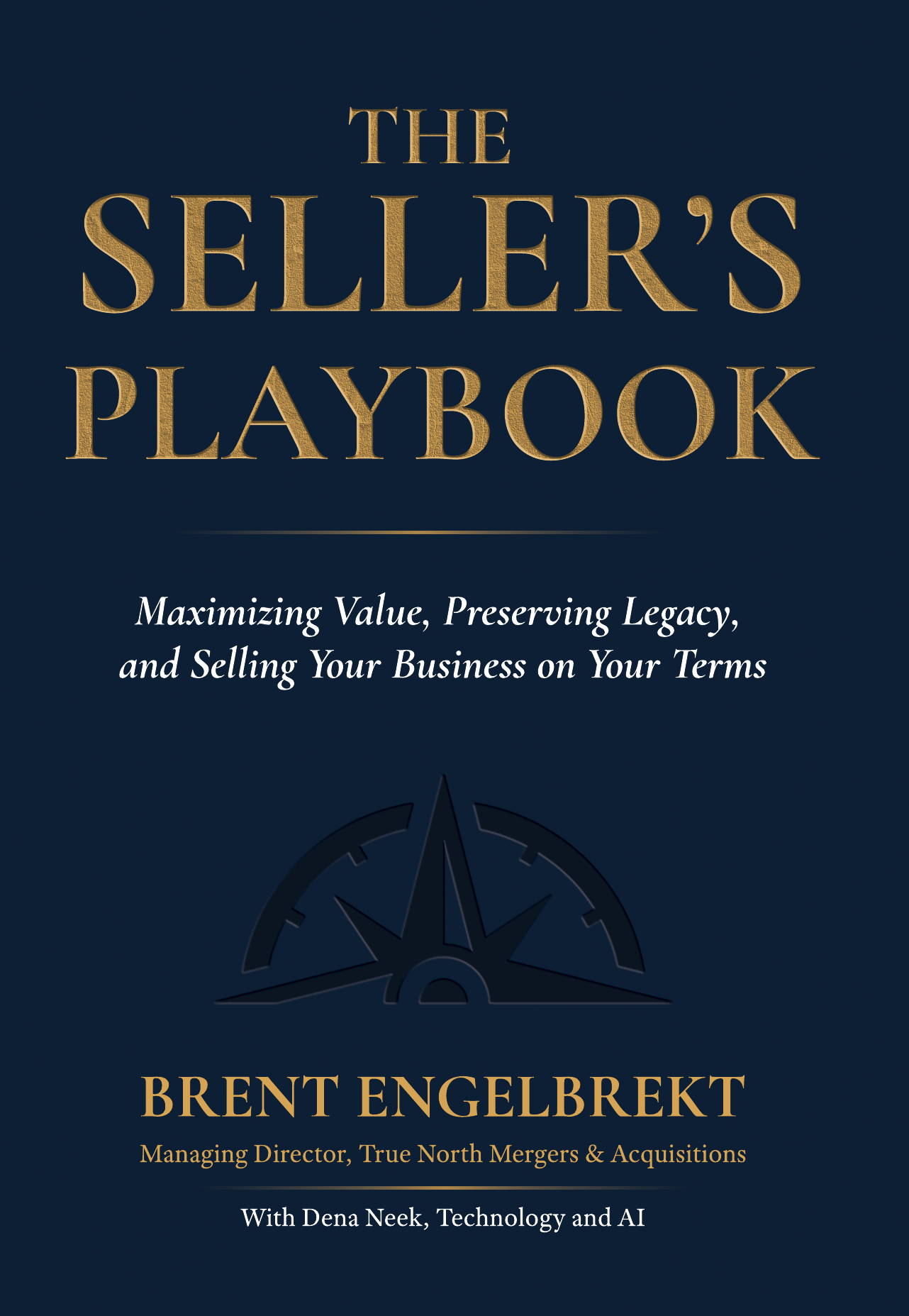
Maximizing Value, Preserving Legacy, and Selling Your Business on Your Terms
For most owners, selling their business is the one deal they will ever run, and the buyer across the table has run dozens. That imbalance shapes everything that follows.
The Seller’s Playbook is the field guide to what actually happens once a company goes to market: how buyers think, what drives your price, where the leverage sits, and how the money really gets divided at the close. It is the part every other exit book skips.
Built as a reference, not a lecture, it moves the way your deal will: from the first buyer call, through valuation, diligence, and negotiation, to the wire that clears and the life that starts after it. Each chapter answers one question owners actually ask, and each ends with a single rule worth carrying into the room.
What you will learn
The Seller’s Rules · with Brent Engelbrekt
Every chapter ends on a single idea worth remembering, a plain rule drawn from Brent’s years across the table. All of those rules are collected in one place in the back of the book, so you can read them on their own as a quick map of everything that matters.
Rule 1
Chapter 1 · The Hidden Reality of Selling a BusinessIsn’t selling my business like selling anything else?
Rule 3
Chapter 3 · What Drives Value, and What Doesn’tWhat is my business actually worth?
Rule 5
Chapter 5 · The Sell-Side Quality of EarningsWhy would I pay to audit my own numbers?
Rule 19
Chapter 19 · Final Bids and Letters of Intent (LOIs)What am I really signing when I sign the LOI?
Rule 20
Chapter 20 · ExclusivityWhy is the period right after signing so dangerous?
Rule 28
Chapter 28 · Escrows, Indemnification, and Post-Closing RiskHow much of the price is really at risk after closing?
Rule 30
Chapter 30 · EarnoutsWill I ever actually see the earnout money?
The Final Rule
Final Chapter · Life and Identity After the SaleWho am I, and what do I do, once the business is gone?
What AI Changes Here · with Dena Neek
Thirteen short sections run through the book. Each one takes a chapter you have just read and says what buyers now do with AI, and the two or three decisions that fall out of it for you. Buyers screen continuously, read everything, and price what they find. The rules of the deal did not change. The speed and the depth did.
Were the “What AI Changes Here” sections useful to you? Tell us in the reader survey.
Chapter 2 · How Buyers Really Think
The buyer is still asking how much risk are we taking on. They are just asking it earlier now, and often before you know the conversation has started.
Chapter 19 · Final Bids and Letters of Intent (LOIs)
The document is still a preview of the person. The difference now is that you can check the preview against their record.
Chapter 27 · Working Capital
Working capital is economics, not accounting. The side that shows up with the better analysis sets the peg, and which side that is gets decided a year before anyone asks you about it.

Dena Neek, Technology and AI
Brent Engelbrekt with Dena Neek. Hardcover, six parts, 34 chapters, and every Seller’s Rule collected in the back.
Retailer links go live the day the book is available.
Be told the day it is available
The published edition is in progress. Leave your email and you get one message the day it is available. Nothing else.
The people behind the book

CBI, M&AMI, CM&AP, CEPA · Managing Director, True North Mergers & Acquisitions
Brent Engelbrekt, CBI, M&AMI, CM&AP, CEPA, is a Managing Director at True North Mergers & Acquisitions, where he advises owners of privately held companies on the sale of their businesses. He has guided entrepreneurs through one of the most important financial and personal decisions of their lives: the sale of a company. Brent lives in Minnesota and works with business owners throughout the United States.
He wrote this book because the owners he works with kept asking the same questions, sometimes too late, and there was nowhere to send them for straight answers about what actually happens once a business goes to market.
Technology and AI · Co-founder and CEO, ExBrain
She is an AI engineer and entrepreneur who has built and sold three technology companies and now designs AI-native systems for operating businesses. In this book she owns a single question: what has AI changed about how a company is analyzed, valued, and bought, and what should an owner do about it before going to market. The deal is Brent’s territory. The technology is hers.
Dena is co-founder and CEO of ExBrain, an AI platform built for the moment every buyer dreads: the founder leaves after close and the business stops working, because everything that made it work was in their head. ExBrain learns how the business actually runs and keeps it running without them. Her latest venture received Judges’ Choice at the 2024 AI Innovation Summit and was selected by the U.S. Department of Commerce as one of twelve startups representing American innovation at CES 2025.
Get Chapter 1
The full first chapter, the waterfall, and Rule 1, as a PDF.