What sellers often miss
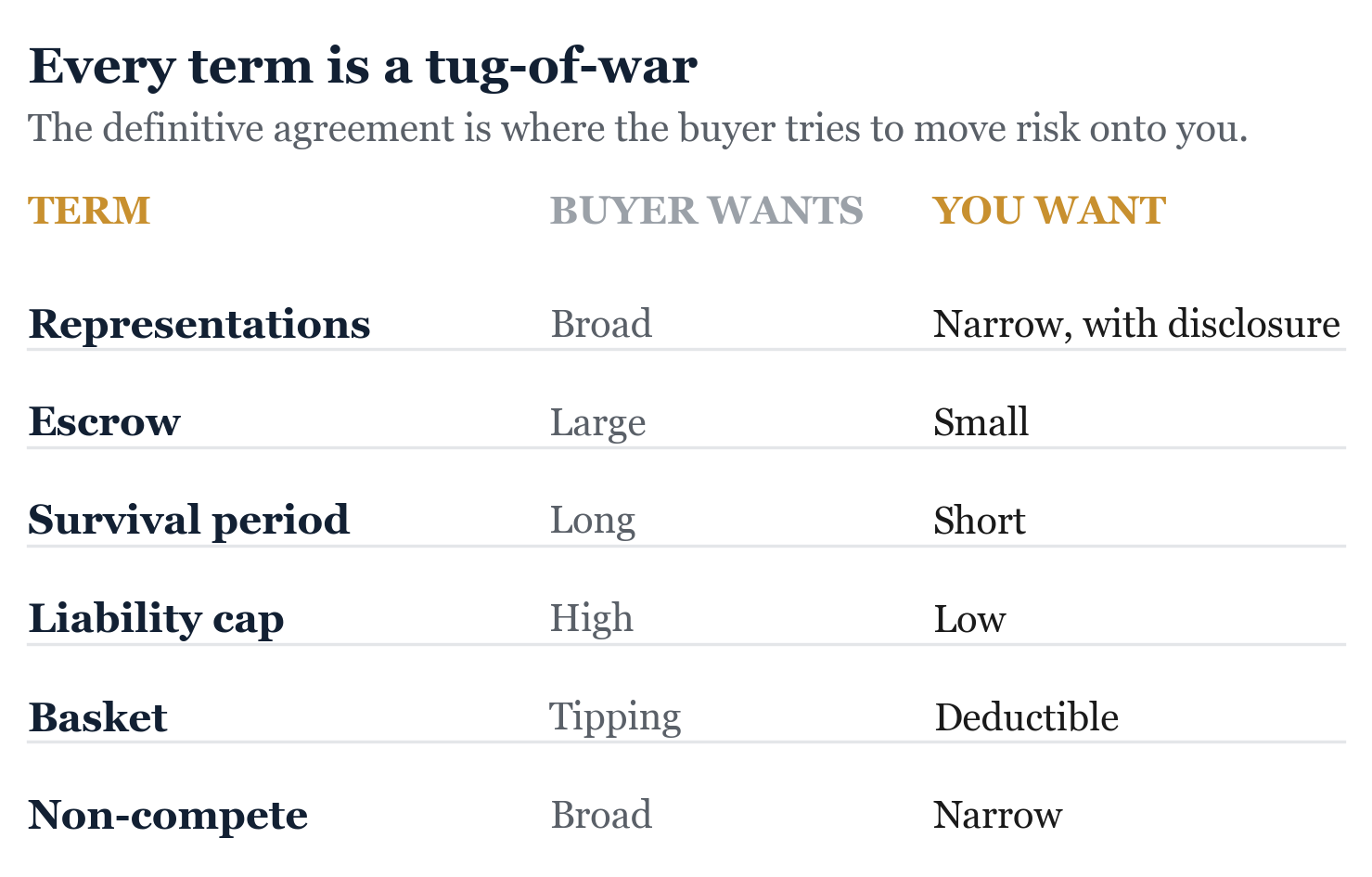
Many owners view definitive agreements as legal documents that their attorney will handle. While legal expertise is essential, the business implications of these documents belong to the seller. Escrows, indemnification caps, baskets, survival periods, working capital adjustments, restrictive covenants, and dispute-resolution provisions all have direct economic consequences.
The takeaway
Never assume that a favorable purchase price guarantees a favorable outcome. Read the documents carefully. Ask questions. Understand how risk is being allocated. Work closely with experienced advisors. The best deals are not merely those with the highest valuations. They are the ones where the economics negotiated at the beginning remain protected through the final agreement.
Illustrative, not your deal. Where the book uses dollar figures, they are there to show how something works, not to describe your business. Your banker, your accountant, and your attorney will put real numbers to your own situation. Full note.
Terms this chapter uses
Read the full chapter in the book