Skip to content
The Seller’s Playbook

Rule 9 of 34 · Part 1, Before You Go to Market

Focus on what you keep, not what you sell for.

Chapter 9: Pre-Sale Tax and Estate Planning

How much of the sale do I actually keep?

What sellers often miss

Many owners spend years trying to increase the value of their business while spending very little time planning how to protect that value after a sale. They may negotiate aggressively over purchase price while overlooking tax strategies that could have a far greater impact on their final outcome.

The takeaway

The measure of a successful transaction is not the number announced at closing. It is the wealth that remains available to support your family, your future, and your goals. The earlier you begin planning, the more options you will have and the more value you are likely to preserve.
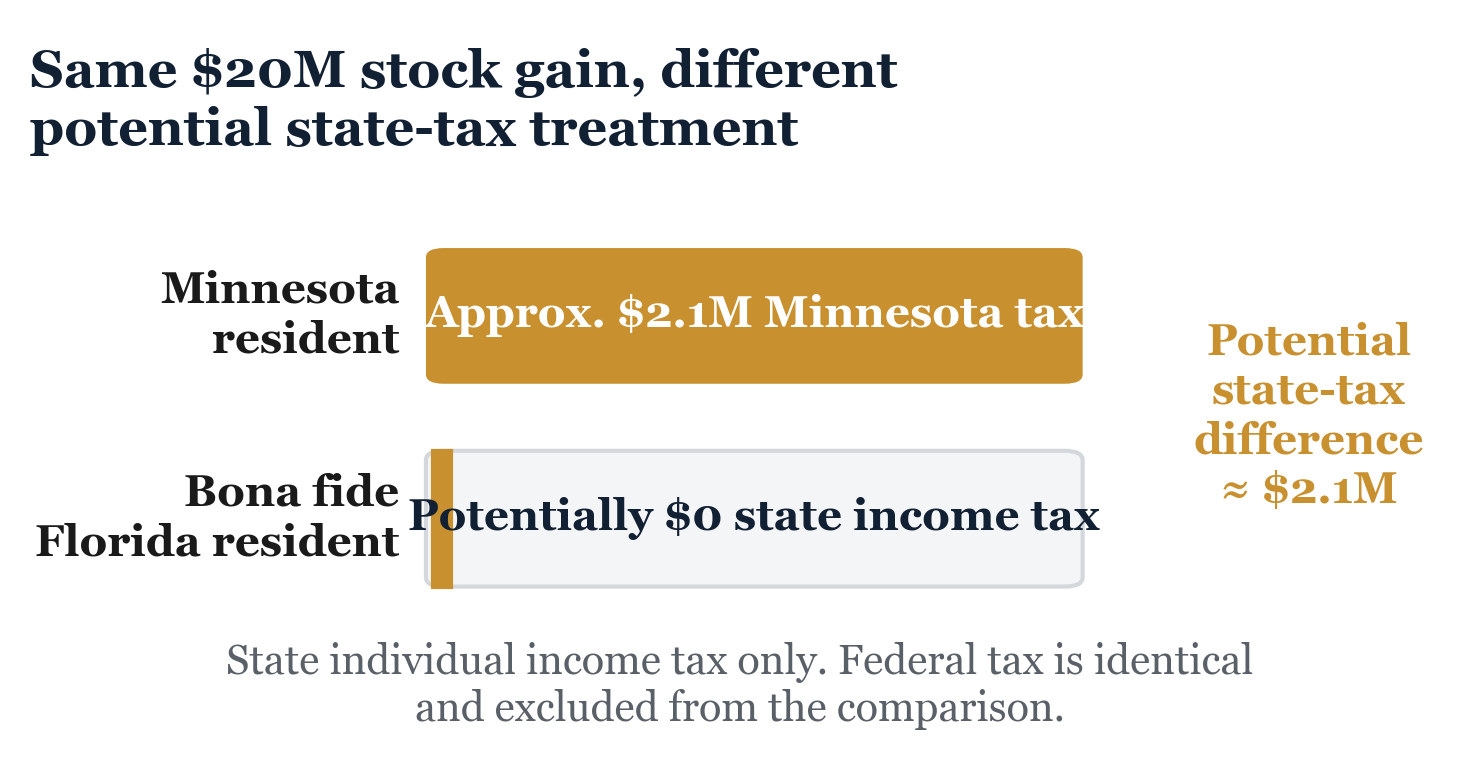
Figure from the book · Chapter 9
Figure from Pre-Sale Tax and Estate Planning. Assumes a 20 million dollar long-term taxable gain from a cash sale of personally held investment stock, no QSBS exclusion, no Minnesota-source gain, and identical federal taxes in both cases. It also assumes the seller established genuine Florida domicile before the sale became binding and did not remain a Minnesota resident under the 183-day rule. Asset sales, pass-through interests, earnouts, and installment payments can produce different results. Rates are approximate and change; confirm current law and the specific facts with qualified tax counsel.
Assumes a 20 million dollar long-term taxable gain from a cash sale of personally held investment stock, no QSBS exclusion, no Minnesota-source gain, and identical federal taxes in both cases. It also assumes the seller established genuine Florida domicile before the sale became binding and did not remain a Minnesota resident under the 183-day rule. Asset sales, pass-through interests, earnouts, and installment payments can produce different results. Rates are approximate and change; confirm current law and the specific facts with qualified tax counsel.

Illustrative, not your deal. Where the book uses dollar figures, they are there to show how something works, not to describe your business. Your banker, your accountant, and your attorney will put real numbers to your own situation. Full note.

Terms this chapter uses

Read the full chapter in the book